
Search Results for compound
Searching compound for Fc coins Buyfc26coins.com is EA Sports official for FC 26 coins This is the best service ever..uAXL returned 3625 results.
Displaying compounds 1526 - 1550 of 3625 in total
PE(19:iso/17:0cycw7c) (ECMDB23531)
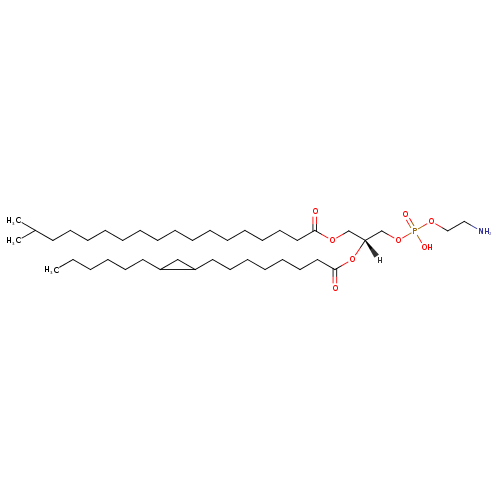
IUPAC: (2-aminoethoxy)[(2R)-2-{[8-(2-hexylcyclopropyl)octanoyl]oxy}-3-[(17-methyloctadecanoyl)oxy]propoxy]phosphinic acid
Matched Description: … phosphorylethanolamine moiety occupies a glycerol substitution site. As is the case with diacylglycerols ... phospholipids is continually in flux, owing to phospholipid degradation and the continuous ... ethanolamine is then transferred from CDP-ethanolamine to phosphatidic acid to yield PE. The second involves the decarboxylation of PS. …
PE(19:iso/19:0cycv8c) (ECMDB23533)
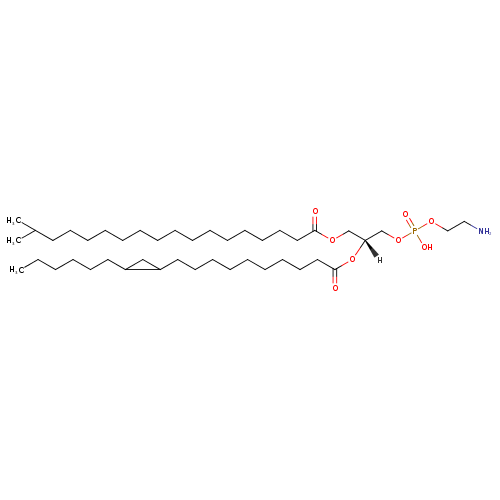
IUPAC: (2-aminoethoxy)[(2R)-2-{[10-(2-hexylcyclopropyl)decanoyl]oxy}-3-[(17-methyloctadecanoyl)oxy]propoxy]phosphinic acid
Matched Description: … phosphorylethanolamine moiety occupies a glycerol substitution site. As is the case with diacylglycerols ... within phospholipids is continually in flux, owing to phospholipid degradation and the continuous ... ethanolamine is then transferred from CDP-ethanolamine to phosphatidic acid to yield PE. The second involves the decarboxylation of PS. …
PE(18:1(9Z)/16:1(9Z)) (ECMDB24125)
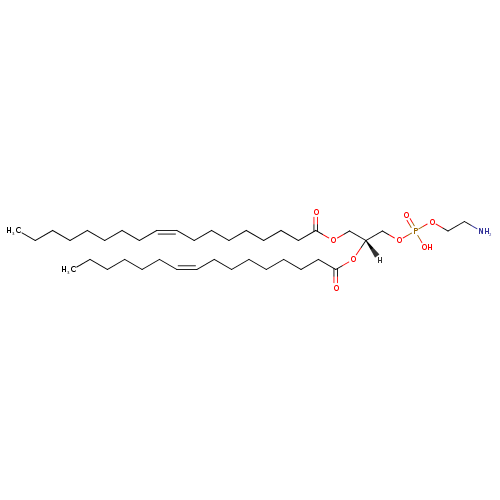
IUPAC: (2-aminoethoxy)[(2R)-2-[(9Z)-hexadec-9-enoyloxy]-3-[(9Z)-octadec-9-enoyloxy]propoxy]phosphinic acid
Matched Description: … phosphorylethanolamine moiety occupies a glycerol substitution site. As is the case with diacylglycerols ... is continually in flux, owing to phospholipid degradation and the continuous phospholipid remodeling ... ethanolamine be activated by phosphorylation and then coupled to CDP. The ethanolamine is then …
PE(12:0/19:1(9Z)) (ECMDB24546)
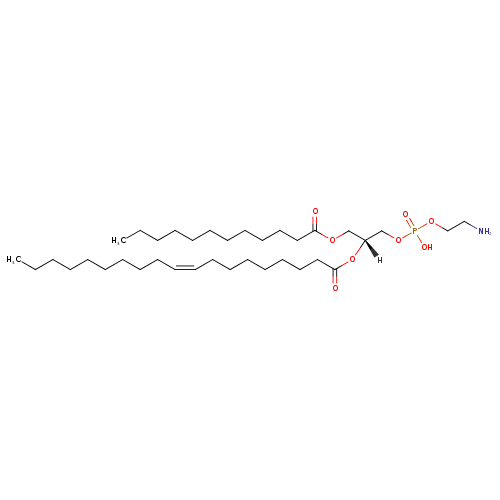
IUPAC: (2-aminoethoxy)[(2R)-3-(dodecanoyloxy)-2-[(9Z)-nonadec-9-enoyloxy]propoxy]phosphinic acid
Matched Description: … phosphorylethanolamine moiety occupies a glycerol substitution site. As is the case with diacylglycerols ... fatty acid distribution at the C-1 and C-2 positions of glycerol within phospholipids is continually ... be activated by phosphorylation and then coupled to CDP. The ethanolamine is then transferred from …
PE(15:0/19:1(9Z)) (ECMDB24551)
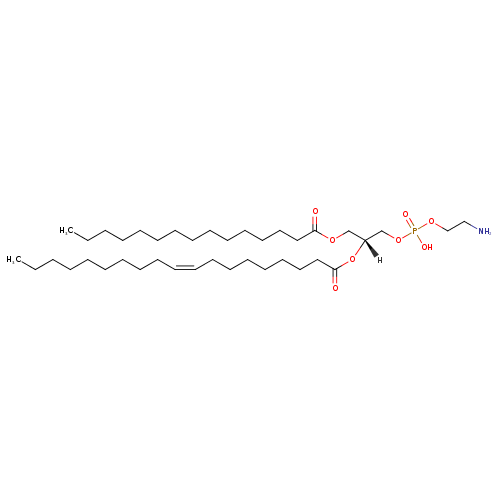
IUPAC: (2-aminoethoxy)[(2R)-2-[(9Z)-nonadec-9-enoyloxy]-3-(pentadecanoyloxy)propoxy]phosphinic acid
Matched Description: … phosphorylethanolamine moiety occupies a glycerol substitution site. As is the case with diacylglycerols ... , the fatty acid distribution at the C-1 and C-2 positions of glycerol within phospholipids is ... ethanolamine be activated by phosphorylation and then coupled to CDP. The ethanolamine is then transferred …
PE(16:0/19:0cycv8c) (ECMDB24558)
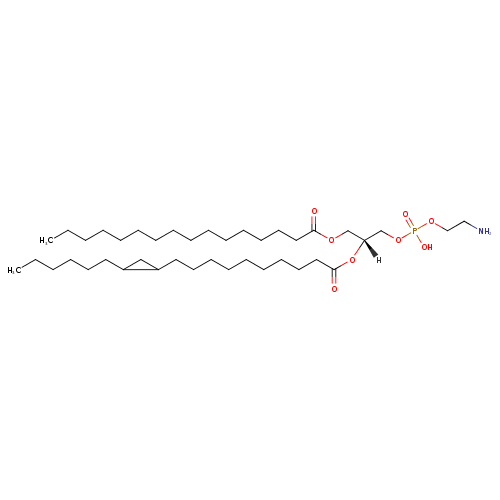
IUPAC: (2-aminoethoxy)[(2R)-3-(hexadecanoyloxy)-2-{[10-(2-hexylcyclopropyl)decanoyl]oxy}propoxy]phosphinic acid
Matched Description: … phosphorylethanolamine moiety occupies a glycerol substitution site. As is the case with diacylglycerols ... phospholipids is continually in flux, owing to phospholipid degradation and the continuous phospholipid ... that ethanolamine be activated by phosphorylation and then coupled to CDP. The ethanolamine is then …
PE(16:1(9Z)/19:1(9Z)) (ECMDB24563)
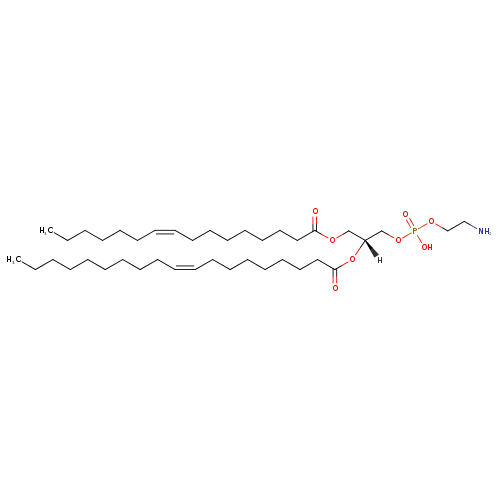
IUPAC: (2-aminoethoxy)[(2R)-3-[(9Z)-hexadec-9-enoyloxy]-2-[(9Z)-nonadec-9-enoyloxy]propoxy]phosphinic acid
Matched Description: … phosphorylethanolamine moiety occupies a glycerol substitution site. As is the case with diacylglycerols ... is continually in flux, owing to phospholipid degradation and the continuous phospholipid remodeling ... ethanolamine be activated by phosphorylation and then coupled to CDP. The ethanolamine is then …
PE(18:0/19:1(9Z)) (ECMDB24570)
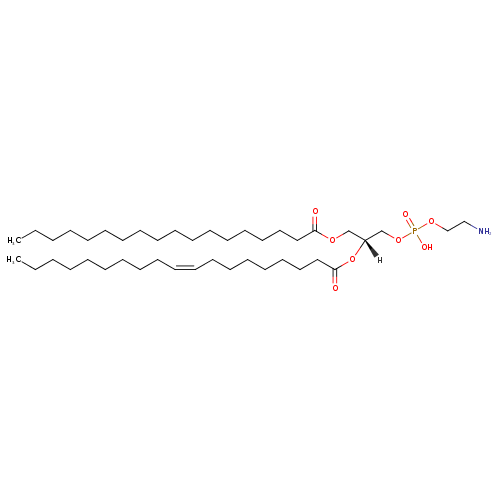
IUPAC: (2-aminoethoxy)[(2R)-2-[(9Z)-nonadec-9-enoyloxy]-3-(octadecanoyloxy)propoxy]phosphinic acid
Matched Description: … phosphorylethanolamine moiety occupies a glycerol substitution site. As is the case with diacylglycerols ... , the fatty acid distribution at the C-1 and C-2 positions of glycerol within phospholipids is ... ethanolamine be activated by phosphorylation and then coupled to CDP. The ethanolamine is then transferred from …
PE(18:1(9Z)/19:1(9Z)) (ECMDB24575)
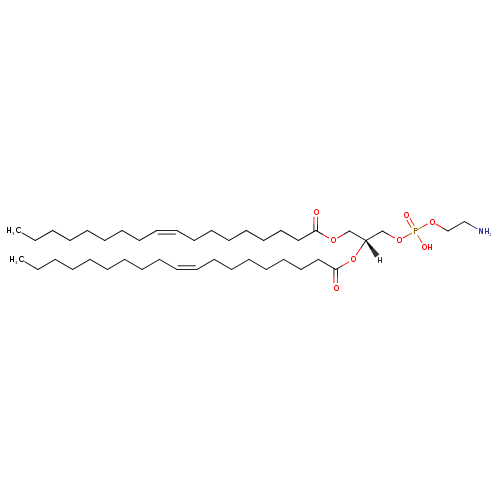
IUPAC: (2-aminoethoxy)[(2R)-2-[(9Z)-nonadec-9-enoyloxy]-3-[(9Z)-octadec-9-enoyloxy]propoxy]phosphinic acid
Matched Description: … phosphorylethanolamine moiety occupies a glycerol substitution site. As is the case with diacylglycerols ... is continually in flux, owing to phospholipid degradation and the continuous phospholipid remodeling ... ethanolamine be activated by phosphorylation and then coupled to CDP. The ethanolamine is then …
PE(19:0cycv8c/15:0cyclo) (ECMDB24577)
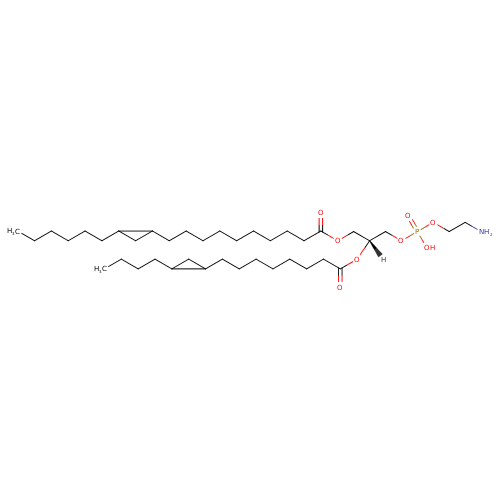
IUPAC: (2-aminoethoxy)[(2R)-2-{[8-(2-butylcyclopropyl)octanoyl]oxy}-3-{[10-(2-hexylcyclopropyl)decanoyl]oxy}propoxy]phosphinic acid
Matched Description: … phosphorylethanolamine moiety occupies a glycerol substitution site. As is the case with diacylglycerols ... to CDP. The ethanolamine is then transferred from CDP-ethanolamine to phosphatidic acid to yield PE. The second involves the decarboxylation of PS. ... PE(19:0cycv8c/15:0cyclo) is a phosphatidylethanolamine. It is a glycerophospholipid in which a …
PE(19:1(9Z)/18:1(9Z)) (ECMDB24589)
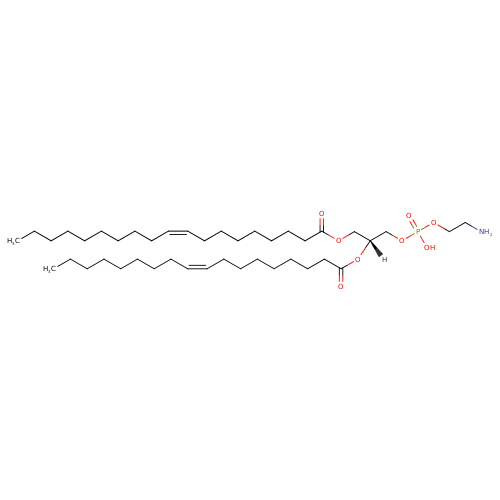
IUPAC: (2-aminoethoxy)[(2R)-3-[(9Z)-nonadec-9-enoyloxy]-2-[(9Z)-octadec-9-enoyloxy]propoxy]phosphinic acid
Matched Description: … phosphorylethanolamine moiety occupies a glycerol substitution site. As is the case with diacylglycerols ... is continually in flux, owing to phospholipid degradation and the continuous phospholipid remodeling ... ethanolamine be activated by phosphorylation and then coupled to CDP. The ethanolamine is then …
Ubiquinol-6 (ECMDB21460)
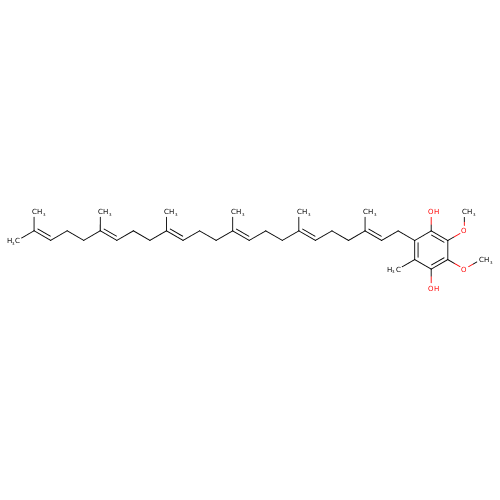
IUPAC: 2-[(2E,6E,10E,14E,18E)-3,7,11,15,19,23-hexamethyltetracosa-2,6,10,14,18,22-hexaen-1-yl]-5,6-dimethoxy-3-methylbenzene-1,4-diol
CAS: 5677-58-7
Matched Description: … Ubiquinol-6 is a member of the chemical class known as Polyprenylbenzoquinols. They are reduced ... through the ETC to the oxygen, which is then reduced to water. The transfer of electrons through ETC ... , which is used by ATP synthase (located on the membrane) to generate ATP. …
Iminobutyrate (ECMDB23082)
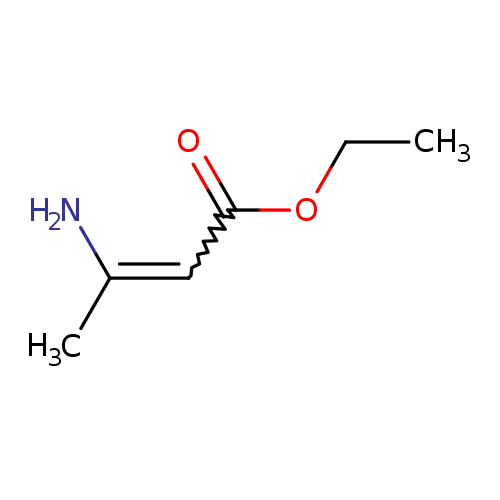
IUPAC: ethyl 3-aminobut-2-enoate
Matched Description: … Iminobutyrate is a short-lived, unstable intermediate that appears in the degradation or ... dehydration of threonine via L-threonine dehydratase. It is a tautomer of aminocrotonate, which tautomerizes to its imine form iminobutyrate. …
Deoxycytidine 5'-triphosphate (ECMDB21527)

IUPAC: ({[({[(2S,3R,5R)-5-(4-amino-2-oxo-1,2-dihydropyrimidin-1-yl)-3-hydroxyoxolan-2-yl]methoxy}(hydroxy)phosphoryl)oxy](hydroxy)phosphoryl}oxy)phosphonic acid
CAS: 2056-98-6
Matched Description: … is synthesized by DNA polymerase. During DNA synthesis dCTP has the PPi (pyrophosphate) cleaved off ... and the dCMP is incorporated into the DNA strand at the 3' end. ... Deoxycytidine triphosphate (dCTP) is a cytidine nucleotide triphosphate that is used whenever DNA …
D-Glyceraldehyde (ECMDB01051)
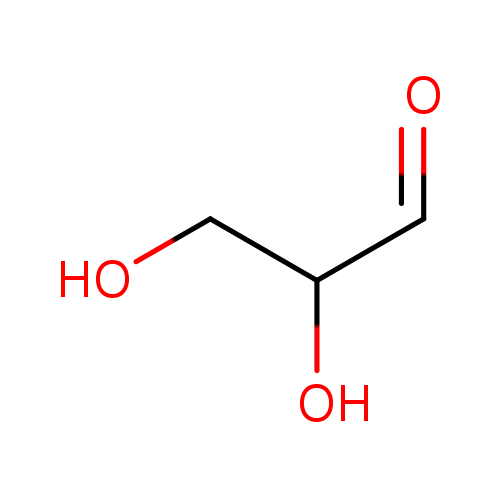
IUPAC: 2,3-dihydroxypropanal
CAS: 56-82-6
Matched Description: … Glyceraldehyde is a triose monosaccharide with chemical formula C3H6O3. It is the simplest of all ... carbohydrate metabolism. The word comes from combining glycerine and aldehyde, as glyceraldehyde is merely glycerine with one hydroxide changed to an aldehyde. ... common aldoses. It is a sweet colorless crystalline solid that is an intermediate compound in …
sn-glycero-3-phosphocholine (ECMDB24248)
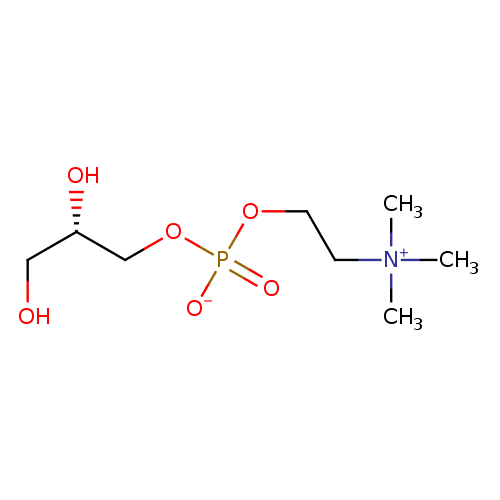
IUPAC: {2-[(2,3-dihydroxypropyl phosphonato)oxy]ethyl}trimethylazanium
Matched Description: … sn-Glycero-3-phosphocholine (GPC) is a choline derivative and one of the two major forms of choline ... storage (along with phosphocholine) in the cytosol. Glycerophosphorylcholine is also osmolyte. GPC ... is an intermediate of glycerophospholipid metabolism. It is converted from both 2-acyl-sn-glycero-3 …
Galactonic acid (ECMDB00565)
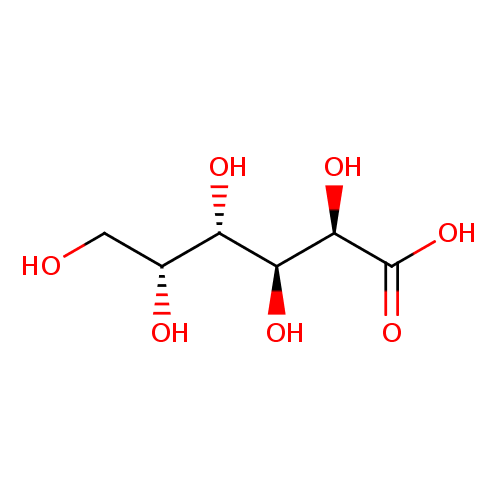
IUPAC: (2R,3S,4S,5R)-2,3,4,5,6-pentahydroxyhexanoic acid
CAS: 13382-27-9
Matched Description: … Galactonic acid is a member of the chemical class known as Sugar Acids and Derivatives. These are ... sugar acid, an oxidized form of D-galactose. It is the main component of pectin, in which it exists ... compounds containing a saccharide unit which bears a carboxylic acid group. D-Galacturonic acid is a …
N-Succinyl-L,L-2,6-diaminopimelate (ECMDB12267)
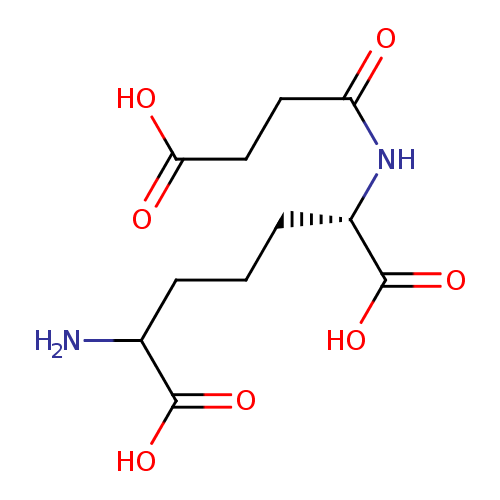
IUPAC: (6S)-2-amino-6-(3-carboxypropanamido)heptanedioic acid
CAS: 26605-36-7
Matched Description: … N-Succinyl-L,L-2,6-diaminopimelate is an intermediate in lysine biosynthesis. It is the third to ... last step in the synthesis of lysine and is converted from N-Succinyl-2-amino-6-ketopimelate via the ... enzyme succinyldiaminopimelate transferase (EC 2.6.1.17). It is then converted to L,L-diaminopimelate …
6-Carboxy-5,6,7,8-tetrahydropterin (ECMDB21180)
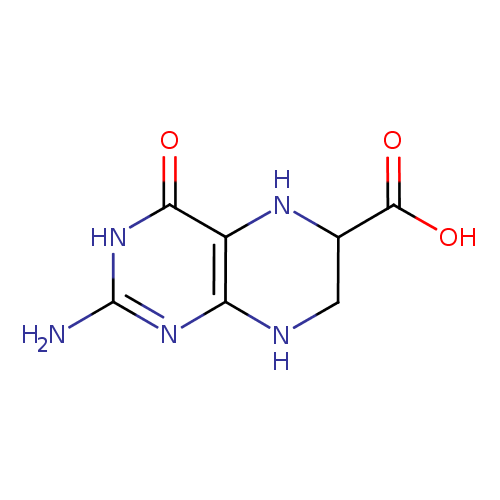
IUPAC: 2-amino-4-oxo-3,4,5,6,7,8-hexahydropteridine-6-carboxylic acid
Matched Description: … 6-carboxy-5,6,7,8-tetrahydropterin is a member of the chemical class known as Alpha Amino Acids and ... Derivatives. These are amino acids in which the amino group is attached to the carbon atom ... immediately adjacent to the carboxylate group (alpha carbon).6-carboxy-5,6,7,8-tetrahydropterin is catalyzed …
Ubiquinol-9 (ECMDB21580)
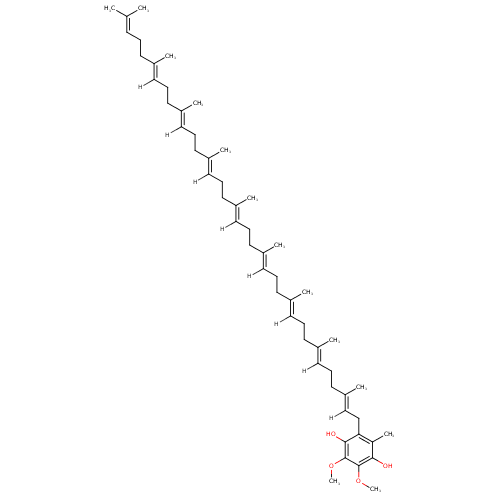
IUPAC: 2,3-dimethoxy-5-methyl-6-[(2E,6E,10E,14E,18E,22E,26E,30E)-3,7,11,15,19,23,27,31,35-nonamethylhexatriaconta-2,6,10,14,18,22,26,30,34-nonaen-1-yl]benzene-1,4-diol
Matched Description: … Ubiquinol-9 is a member of the chemical class known as Polyprenylbenzoquinols. They are reduced ... to the oxygen, which is then reduced to water. The transfer of electrons through ETC results in the ... pumping of H+ across the membrane creating a proton gradient across the membrane, which is used by …
alpha-Lactose (ECMDB00186)
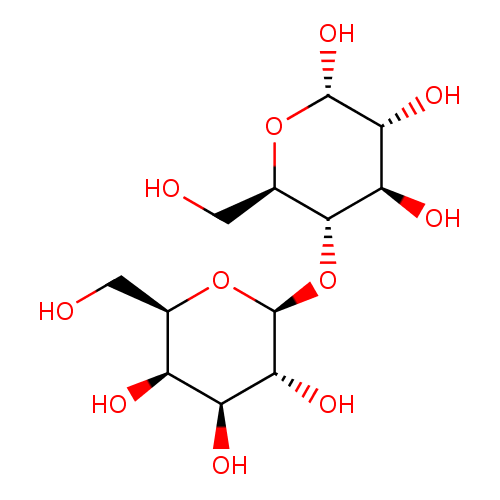
IUPAC: (2R,3R,4S,5R,6S)-2-(hydroxymethyl)-6-{[(2R,3S,4R,5R,6S)-4,5,6-trihydroxy-2-(hydroxymethyl)oxan-3-yl]oxy}oxane-3,4,5-triol
CAS: 63-42-3
Matched Description: … Alpha-Lactose is the alpha anomoer of lactose. It is a disaccharide that consists of galactose and ... glucose joined by an acetal oxygen bridge in the beta orientation Lactose is a sugar substrate ... that can be readily used by E. coli. The consumption of lactose by E. coli is controlled by the lac …
PE(16:1(9Z)/16:1(9Z)) (ECMDB08957)
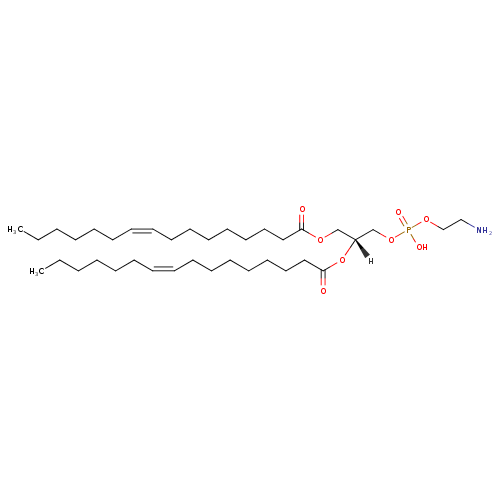
IUPAC: (2-aminoethoxy)[(2R)-2,3-bis[(9Z)-hexadec-9-enoyloxy]propoxy]phosphinic acid
Matched Description: … phosphorylethanolamine moiety occupies a glycerol substitution site. As is the case with diacylglycerols ... distribution at the C-1 and C-2 positions of glycerol within phospholipids is continually in flux, owing to ... phosphorylation and then coupled to CDP. The ethanolamine is then transferred from CDP-ethanolamine to …
PE(18:1(11Z)/18:1(11Z)) (ECMDB09025)
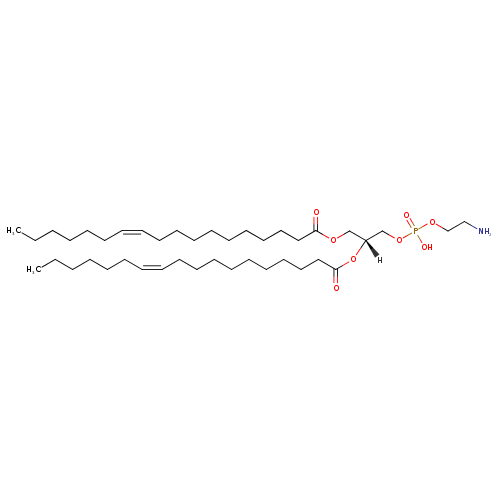
IUPAC: (2-aminoethoxy)[(2R)-2,3-bis[(11Z)-octadec-11-enoyloxy]propoxy]phosphinic acid
Matched Description: … phosphorylethanolamine moiety occupies a glycerol substitution site. As is the case with diacylglycerols ... distribution at the C-1 and C-2 positions of glycerol within phospholipids is continually in flux ... by phosphorylation and then coupled to CDP. The ethanolamine is then transferred from CDP …
PE(19:0/19:0) (ECMDB21020)

IUPAC: (2-aminoethoxy)[2,3-bis(nonadecanoyloxy)propoxy]phosphinic acid
Matched Description: … phosphorylethanolamine moiety occupies a glycerol substitution site. As is the case with diacylglycerols ... then coupled to CDP. The ethanolamine is then transferred from CDP-ethanolamine to phosphatidic acid ... PE(19:0/19:0) is a phosphatidylethanolamine. It is a glycerophospholipid in which a …
PE(14:0/16:0) (ECMDB08824)
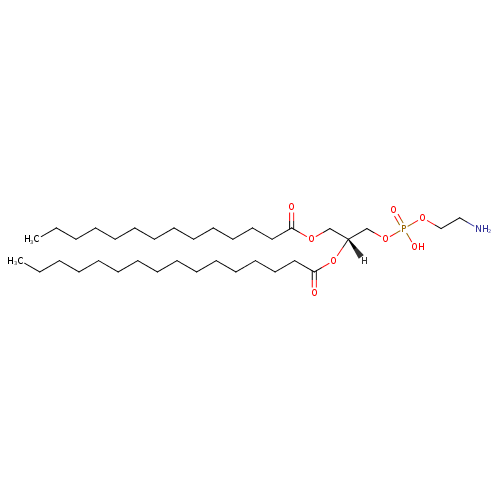
IUPAC: (2-aminoethoxy)[(2R)-2-(hexadecanoyloxy)-3-(tetradecanoyloxy)propoxy]phosphinic acid
Matched Description: … phosphorylethanolamine moiety occupies a glycerol substitution site. As is the case with diacylglycerols ... acid distribution at the C-1 and C-2 positions of glycerol within phospholipids is continually in flux ... activated by phosphorylation and then coupled to CDP. The ethanolamine is then transferred from CDP …